Wood Shop Apron Essentials for Woodworkers
-
Sawdust gets everywhere. Anyone who has spent time at a table saw or bench knows the fine layer that settles into shirt fibers, the way a pencil disappears the moment you set it down, and the frustration of walking across the shop for a tape measure you swear you just had in your hand. A well-designed wood shop apron addresses all three problems at once, protecting your clothing, keeping small tools within reach, and generally making a long shop session feel more organized than chaotic.
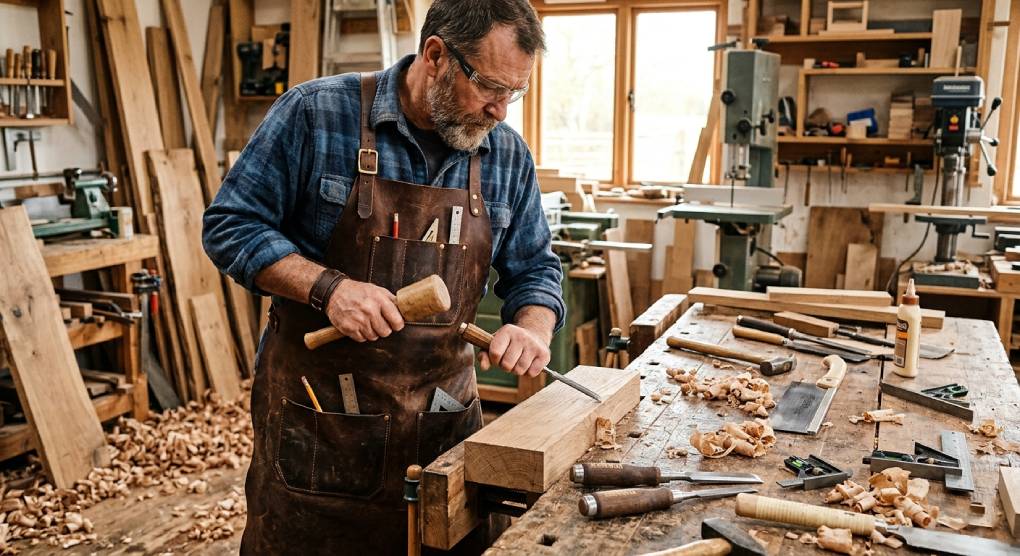
This guide covers what actually separates a genuinely useful wood shop apron from one that just looks the part hanging on a hook.
What a Wood Shop Apron Actually Needs to Do
Woodworking produces a specific mix of hazards and annoyances: fine sawdust, wood chips, splinters, glue residue, and the occasional stray sliver of wood kicked back from a saw. Unlike welding or forge work, the risk is rarely severe heat, but the accumulated mess and constant need for small tools within arm's reach are what actually shape a good apron design.
Material: Waxed Canvas, Denim, or Leather
Waxed canvas is a longstanding favorite in wood shops for good reason, it's water- and stain-resistant, breathable, and holds its shape well over years of use. It's a strong middle-ground option for most home and hobby woodworkers.
Denim is durable and widely available but tends to absorb glue and finish stains permanently, and it lacks the water resistance that waxed canvas or leather provide.
Leather, typically in the 1.2-1.6mm range for woodworking specifically, offers the best resistance to splinters and sharp tool edges, wipes clean of glue and finish rather than absorbing it, and simply outlasts fabric under the repetitive stress of loaded pockets holding hammers, chisels, and tape measures. It's a heavier upfront investment but tends to be the last apron a serious woodworker buys, rather than one of several replaced every couple of years.
Pocket Architecture: The Feature That Matters Most
Ask any experienced woodworker what makes or breaks a shop apron, and pockets come up before anything else. The front main pockets need to be large enough to comfortably hold a tape measure or a handful of screws without excess bulk. Smaller, dedicated chest pockets should have space specifically sized for a pencil, marking knife, or small calipers, items that get lost immediately in a bigger, general-purpose pocket. Flap-covered lower pockets help keep fine sawdust from working its way in and settling permanently among smaller tools.
A hanging loop for a dust collector remote or a hammer loop rounds out a well-thought-out layout, letting you keep both hands genuinely free while moving between tasks.
Strap System and All-Day Comfort
Woodworking sessions run long, and a poorly distributed strap system becomes noticeably uncomfortable well before the end of a project. Cross-back straps that spread the apron's weight across both shoulders outperform a single neck loop for anyone spending multiple hours at the bench, especially once the pockets are loaded with tools and hardware. Adjustable straps also matter for layering; shop temperatures vary by season, and an apron that only fits over a t-shirt becomes useless the moment you add a jacket in winter.
Coverage: Full-Length vs. Waist Aprons
Most wood shop damage to clothing happens from roughly the knees up to the chest, which is why a full-length bib apron is generally the better choice over a waist-only design for anyone doing regular bench work, sanding, or table saw operation. Waist aprons offer more freedom of movement and can suit lighter tasks like finishing or assembly, but they leave the chest and upper arms exposed to splinters and dust during heavier cutting work.
Durability Under Repeated Loading
A shop apron gets loaded and unloaded constantly throughout a project, and the stitching at pocket seams takes the brunt of that repeated stress. Look for double-stitched pocket construction and reinforced attachment points rather than a single seam holding the weight of tools. This is one area where cheaper aprons fail first; the pockets tear loose long before the main body of the apron wears out.
Cleaning and Maintenance
Waxed canvas should never go in a washing machine, since it strips the wax coating and degrades water resistance; spot cleaning and occasional re-waxing keep it functional for years. Leather aprons are wiped clean with a damp cloth to remove glue residue, sawdust, and finish splashes, with an occasional conditioner application to prevent the material from drying out, particularly in shops with dust extraction systems that tend to also dry the air.
Sizing for Real Shop Work
Because woodworking involves frequent bending over a bench, reaching overhead for material on a rack, and crouching by a table saw, an apron that's too long or too tight will get in the way constantly. A genuine size range, small through 2XL, with adjustable straps lets you dial in a fit that moves with you rather than restricting your reach.
Choosing the Right One
A well-built wood shop apron should combine a durable, wipe-clean material with pockets genuinely sized for the tools you reach for most tape measure, pencil, chisels, plus a cross-back strap system that stays comfortable through a full session at the bench.
Final Thoughts
The right wood shop apron disappears into the background of your work, you stop noticing it because nothing falls out, nothing chafes, and everything you need is exactly where you left it. Getting the material, pocket layout, and strap system right the first time saves you from cycling through several mediocre replacements before landing on one that actually works.
