How can torque meters help prevent fastening problems in industrial assembly?
-
Torque meters help manufacturers identify fastening inconsistencies by providing measurable information about the rotational force applied to threaded connections or produced by compatible fastening tools. In industrial assembly, using too much torque can damage threads, crack plastic housings, or deform components, while insufficient torque may cause connections to loosen during operation. A suitable torque meter allows technicians to check torque values and compare them with specified requirements.
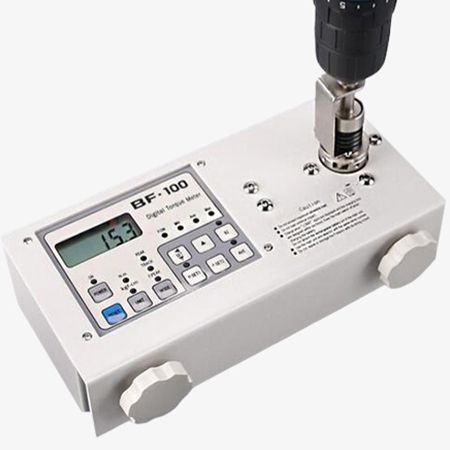
For example, an electronics manufacturer can use SISCO digital torque meter to evaluate electric screwdriver output before assembling circuit boards and protective enclosures. Similarly, automotive component manufacturers can use torque measurement equipment to verify compatible fastening tools and maintain consistent assembly procedures.
Another advantage is that torque measurements provide objective data for quality inspections. Instead of relying entirely on operator experience or tool adjustment settings, production teams can establish inspection procedures and record results for later analysis. Regular testing may also reveal changes in tool performance that require maintenance or adjustment.
When selecting SISCO torque meter, users should consider the measurement range (0.9~340Nm), accuracy, resolution, and compatibility with the fastening tool or component being tested. By incorporating appropriate torque measurement into quality-control procedures, manufacturers can reduce assembly errors, improve process consistency, and increase confidence in the reliability of finished products.