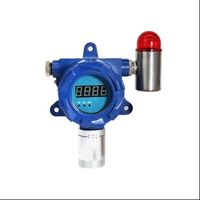
Gas detection is an essential part of workplace safety in industries such as manufacturing, chemical processing, oil and gas, wastewater treatment, and energy production. A gas leak may expose workers to toxic substances, create fire or explosion hazards, or displace oxygen in enclosed spaces. Choosing the right fixed gas detector helps facilities monitor potential hazards continuously and respond promptly when gas concentrations become dangerous. With a range of gas detection products available from ATO.com, users can select monitoring solutions suited to their specific applications.
1. Identify the Gas You Need to Detect
The first step in choosing a fixed gas detector is identifying the target gas. Different environments present different risks, and no single detector can accurately detect every gas. Common monitoring targets include combustible gases such as methane and propane, toxic gases such as carbon monoxide and hydrogen sulfide, and oxygen concentrations that fall outside safe operating limits.
For example, a natural gas installation may require a methane detector, while a wastewater treatment facility may need hydrogen sulfide monitoring. Industrial boilers, laboratories, and chemical storage areas may require different detection technologies according to the substances handled. Before purchasing a detector, assess the materials used in the facility, potential leak sources, and applicable safety requirements.
ATO.com offers gas detection products for different monitoring needs. Matching the detector to the specific gas is essential for obtaining meaningful readings and ensuring that the equipment serves its intended safety purpose.
2. Select the Appropriate Sensor Technology
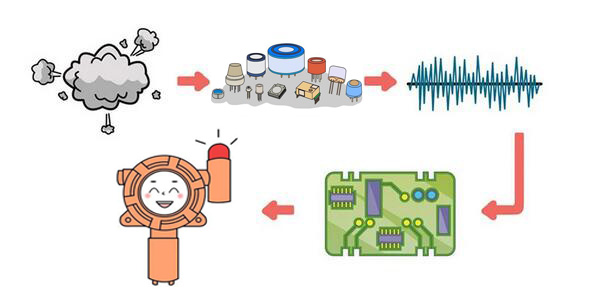
Sensor technology directly affects a detector's performance, accuracy, maintenance requirements, and suitability for a particular environment. Different gases require different sensing principles.
Catalytic bead sensors are commonly used to detect combustible gases, while infrared sensors can detect certain combustible gases without relying on a catalytic reaction. Electrochemical sensors are frequently used for toxic gases and oxygen monitoring. Semiconductor sensors may be suitable for selected gas detection applications, depending on their design and performance characteristics.
Each technology has advantages and limitations. For example, catalytic sensors may be affected by substances that poison the sensing element, while infrared sensors cannot detect every combustible gas. Electrochemical sensors typically have gas-specific sensing elements and may require periodic replacement.
When evaluating ATO fixed gas detection products, check the sensor type, target gases, operating conditions, and maintenance recommendations. Choosing the appropriate technology helps ensure reliable monitoring throughout the detector's service life.
3. Determine the Required Measurement Range
The measurement range should correspond to the expected gas concentrations and the safety requirements of the installation. A detector designed for low-concentration toxic gas monitoring may have a different range from one intended to measure combustible gas concentrations.
For combustible gases, readings are often expressed as a percentage of the lower explosive limit (%LEL). The LEL represents the lowest concentration of a combustible gas in air that can support flame propagation under specified conditions. Toxic gas concentrations are commonly expressed in parts per million (ppm), while oxygen concentration is generally expressed as a percentage by volume.
Users should also consider the detector's resolution, accuracy, response time, and alarm settings. A suitable range allows the instrument to provide useful measurements without compromising the intended warning function. Alarm thresholds must be established according to the gas, application, relevant regulations, and site-specific risk assessment rather than selected solely for convenience.
4. Consider the Installation Environment
A fixed gas detector must withstand the conditions where it will be installed. Temperature, humidity, dust, vibration, corrosive substances, and exposure to water can all influence performance and service life.
Indoor industrial facilities may require protection against dust and moisture, while outdoor installations may need weather-resistant enclosures. Hazardous locations with potential explosive atmospheres may require appropriately certified equipment and installation methods.
Detector placement is equally important. The ideal location depends on the potential leak source, ventilation patterns, gas density, and the physical characteristics of the area. Although lighter-than-air gases may accumulate near higher points and heavier-than-air gases may collect near lower points under certain conditions, airflow and temperature can change their distribution. Placement should therefore follow the manufacturer's instructions and a site-specific gas dispersion assessment.
ATO.com provides gas detection solutions for a variety of industrial requirements. Reviewing each product's operating temperature, enclosure protection rating, certifications, and installation specifications can help users determine whether a detector is suitable for their environment.
5. Check Alarm Functions and Output Compatibility
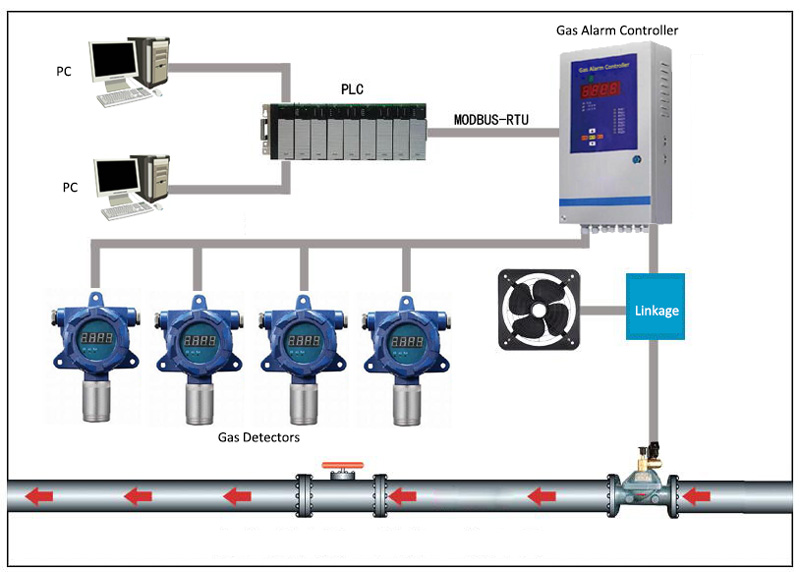
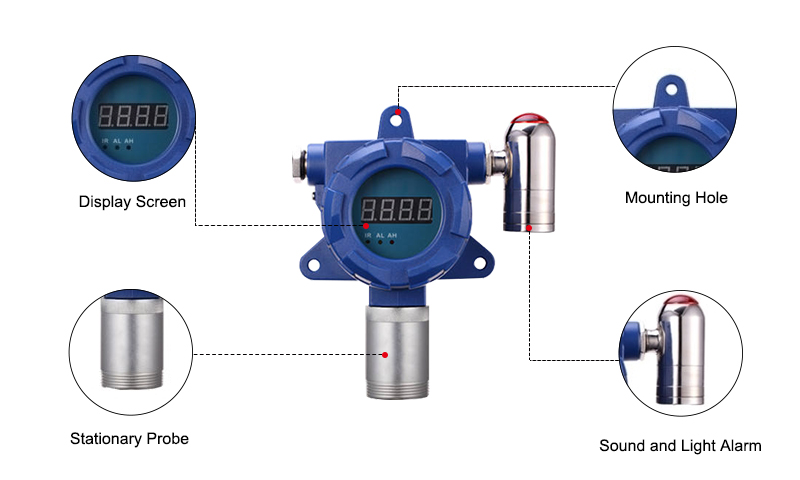
A fixed gas detector is most useful when its readings can trigger an appropriate response. Depending on the model, available functions may include configurable alarm thresholds, relay outputs, analog signals, digital communications, and connections to centralized monitoring systems.
For example, a detector may send a signal to a gas monitoring controller, activate an audible or visual alarm, or initiate a compatible ventilation or shutdown system. However, these functions are not available on every model, and a detector should not be assumed to control external equipment without suitable integration.
Before purchasing, confirm that the detector's output signals are compatible with the existing control system. Consider whether local alarms are sufficient or whether the facility needs centralized monitoring, remote notifications, or integration with a programmable logic controller (PLC).
By selecting a detector with suitable communication and alarm capabilities, users can build a monitoring system that fits their operational requirements and supports a timely response to abnormal conditions.
6. Evaluate Accuracy, Response Time, and Reliability
Accuracy determines how closely a detector's readings correspond to the actual gas concentration under specified conditions. Response time indicates how quickly the instrument reacts when gas concentration changes. Both characteristics are important when evaluating equipment for safety-critical applications.
A detector with a suitable response time can help identify a developing gas hazard promptly, but its performance also depends on sensor condition, gas movement, installation location, and maintenance. Users should review the manufacturer's specifications rather than relying on general product descriptions.
Long-term reliability also depends on calibration, functional testing, and preventive maintenance. Sensors may drift over time or become less responsive because of aging or exposure to interfering substances. Establishing a regular inspection schedule and following manufacturer recommendations helps maintain dependable operation.
When comparing fixed gas detectors from ATO.com, consider the documented accuracy, response time, calibration requirements, sensor lifespan, and available technical support. These factors can be just as important as the initial purchase price.
7. Calculate the Total Cost of Ownership
The lowest-priced detector is not necessarily the most economical choice over its service life. Buyers should consider the initial equipment cost alongside installation, wiring, controllers, calibration, replacement sensors, maintenance, and potential system expansion.
A detector with a lower purchase price may require more frequent servicing or may lack the communication features needed for an existing monitoring system. Conversely, a more capable model may reduce integration difficulties and better support future monitoring needs.
For facilities with multiple monitoring points, it is also important to consider whether the selected detectors can work with a shared control platform. Standardizing compatible equipment may simplify maintenance, operator training, and spare-parts management.
ATO.com offers gas detection products for different application requirements, allowing buyers to compare specifications and identify options that fit their operational and budgetary priorities. Evaluating the complete lifecycle cost can help businesses make a more informed investment.
8. Confirm Certification and Regulatory Requirements
Fixed gas detectors used in industrial environments may need to meet specific standards or carry certifications based on their intended use and installation location. Requirements can vary depending on the gas being monitored, the jurisdiction, and whether the area is classified as hazardous.
For installations in potentially explosive atmospheres, verify that the detector and associated electrical equipment have the appropriate approvals for the specific hazardous location. Confirm that the instrument's measurement performance and alarm arrangements meet applicable workplace safety requirements.
Certification should be verified against the exact model and configuration rather than assumed from a product category or brand name. Users should also ensure that installation, commissioning, and maintenance are performed by qualified personnel in accordance with applicable requirements.
9. Match the Detector to Your Industry
Different industries have different gas detection priorities. Chemical plants may need to monitor toxic and combustible gases around processing equipment. Wastewater treatment facilities may require hydrogen sulfide monitoring. Commercial boiler rooms may need combustible gas detection, while manufacturing facilities may require multiple detectors connected to a central control system.
Laboratories and specialized production environments may need monitoring based on the specific chemicals and processes involved. In each case, the selection process should begin with a hazard assessment rather than choosing a detector based solely on price or general-purpose claims.
For larger facilities, a coordinated system may require several detectors positioned at strategic locations. Proper coverage, compatible controllers, clear alarm procedures, and routine maintenance are essential for making the system effective.
10. Why Consider ATO Fixed Gas Detection Products?
Selecting a fixed gas detector involves balancing measurement performance, environmental suitability, integration requirements, and long-term maintenance. ATO.com offers gas detection products that users can evaluate for a range of industrial monitoring applications.
Before making a purchase, compare the available models by target gas, sensor technology, measurement range, accuracy, response time, alarm functions, output signals, enclosure rating, and certification. If a project involves multiple gases or hazardous locations, confirm that each selected model is appropriate for its intended installation.
Providing the supplier with details about the target gas, expected concentration range, ambient conditions, required alarm outputs, and installation environment can help narrow the options and reduce the risk of selecting incompatible equipment.
Conclusion
Choosing the right fixed gas detector requires a clear understanding of the hazards present, the gases that must be monitored, and the operating conditions of the installation. Sensor technology, measurement range, response time, alarm functions, environmental protection, certification, and maintenance requirements all influence the suitability of a detector.
By carefully comparing these factors, businesses can select monitoring equipment that supports their safety procedures and operational needs. Explore the fixed gas detection products available from ATO.com to identify a solution suited to your application. With appropriate equipment selection, professional installation, and regular maintenance, a fixed gas detection system can become an important part of a comprehensive workplace safety strategy.
Make my introduction more conciseAdd a practical selection checklist