Lanka Developers Community

    Lanka Developers

    • Register
    • Login
    • Search
    • Categories
    • Recent
    • Tags
    • Popular
    • Users
    • Groups
    • Shop
    1. Home
    2. rani jaibros
    • Profile
    • Following 0
    • Followers 0
    • Topics 2
    • Posts 2
    • Best 0
    • Controversial 0
    • Groups 0

    rani jaibros

    @rani jaibros

    Jaibros is your trusted partner for premium CNC tools, carbide inserts, measuring instruments, and industrial cutting solutions. We deliver precision, performance, and reliability to manufacturers across India, helping businesses achieve superior machining efficiency and productivity.

    0
    Reputation
    1
    Profile views
    2
    Posts
    0
    Followers
    0
    Following
    Joined Last Online
    Website www.jaibros.com/ Location C-28, First Floor Phase-1, opposite Nexa Service Centre,

    rani jaibros Unfollow Follow

    Latest posts made by rani jaibros

    • Hidden Costs of Using Low-Quality CNC Tools

      Why Investing in Quality CNC Tools Saves More Than You Think

      Every manufacturing business focuses on reducing production costs while maintaining high-quality output. However, many companies unknowingly increase their overall expenses by investing in inexpensive cutting tools instead of high-quality solutions. While low-cost tooling may appear to save money initially, the long-term consequences often result in higher operating costs, reduced productivity, and lower profitability. Choosing the right CNC tool is not simply about purchase price—it is about long-term value.
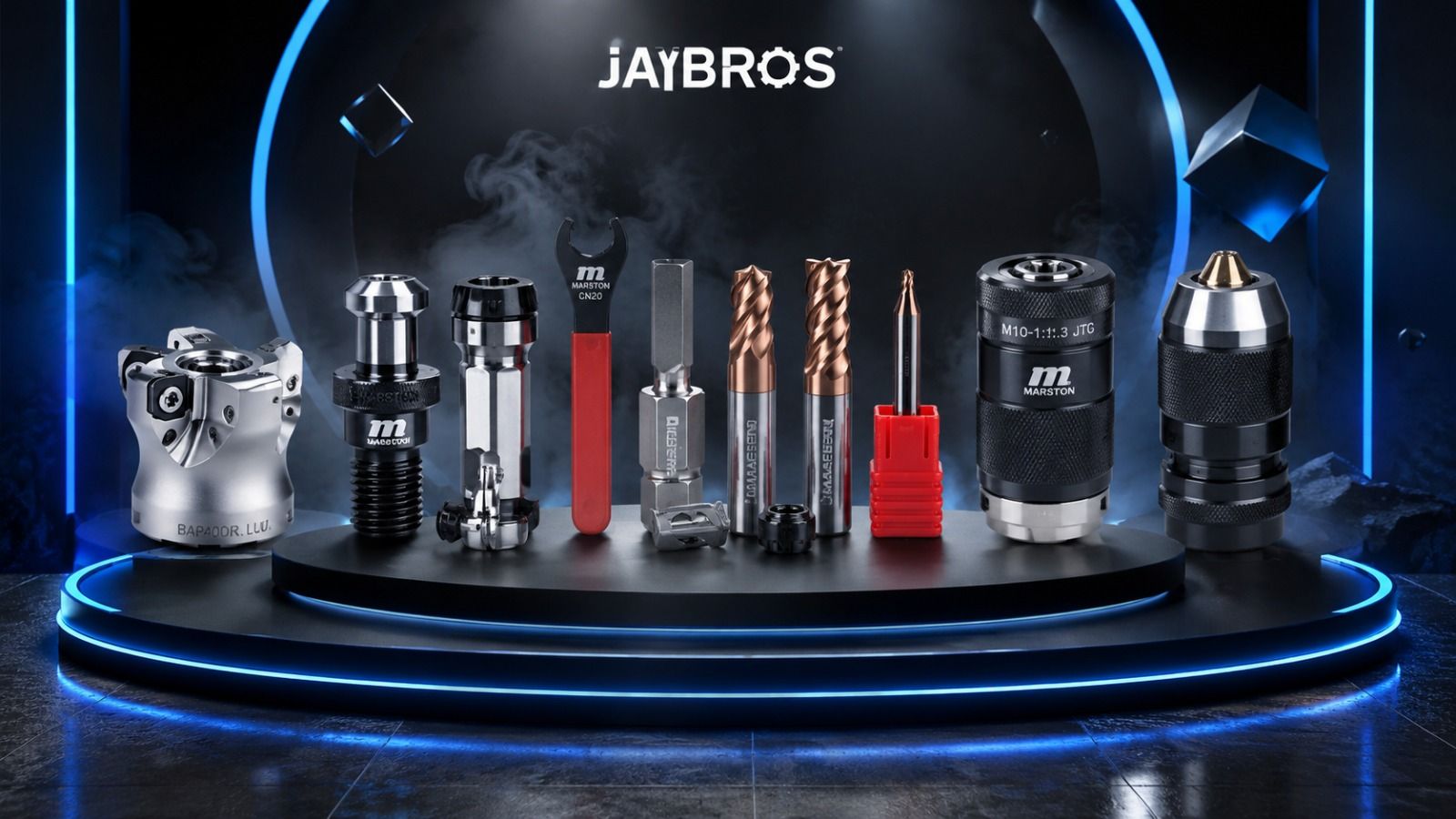
      cnc tool.jpeg

      Modern machining demands precision, consistency, and efficiency. A poor-quality cutting tool can lead to excessive wear, machine downtime, inaccurate dimensions, poor surface finish, and increased material waste. These hidden costs often exceed the initial savings gained from buying cheaper tools.

      Why Tool Quality Matters
      A cutting tool directly influences machining speed, accuracy, surface finish, and production efficiency. Even the most advanced CNC machine cannot deliver consistent results if the tooling is unreliable.
      High-quality tooling helps manufacturers:
      Improve machining accuracy
      Reduce production downtime
      Increase tool life
      Lower scrap rates
      Maintain consistent quality
      Improve customer satisfaction
      On the other hand, poor-quality tools can negatively impact every stage of production.

      Hidden Cost #1: Frequent Tool Replacement
      One of the biggest disadvantages of low-quality tooling is its short lifespan.
      A low-grade CNC tool wears out much faster because it cannot withstand continuous cutting temperatures and heavy machining loads.
      Frequent replacement leads to:
      Increased tooling expenses
      More machine stoppages
      Higher labor costs
      Lower production efficiency
      Although premium tools cost more initially, they often machine significantly more components before replacement becomes necessary.

      Hidden Cost #2: Machine Downtime
      Every minute a CNC machine remains idle affects production schedules.
      When cutting tools fail unexpectedly, operators must:
      Stop production
      Replace the tool
      Recalibrate machining parameters
      Inspect finished components
      These interruptions reduce productivity and delay customer deliveries.
      Reliable tooling minimizes unplanned downtime and keeps production running efficiently.

      Hidden Cost #3: Poor Surface Finish
      Customers expect precision-machined parts with excellent surface quality.
      Low-quality cutting tools often produce:
      Rough surfaces
      Burr formation
      Chatter marks
      Dimensional inconsistencies
      Poor surface finish frequently requires additional polishing or finishing operations, increasing manufacturing costs.

      Hidden Cost #4: Higher Scrap Rates
      Dimensional inaccuracies caused by poor tooling often result in rejected parts.
      Scrap not only wastes raw material but also consumes:
      Machine time
      Operator effort
      Electricity
      Coolant
      Production capacity
      Reducing scrap is one of the fastest ways to improve manufacturing profitability.

      Hidden Cost #5: Increased Machine Wear
      Poor cutting performance places unnecessary stress on machine components.
      Excessive vibration caused by inferior tools accelerates wear on:
      Machine spindle
      Bearings
      Tool holders
      Guideways
      Fixtures
      Regular machine repairs significantly increase long-term maintenance costs.

      Hidden Cost #6: Reduced Productivity
      Production efficiency depends on machining speed and consistency.
      The best CNC tools allow manufacturers to operate at higher cutting speeds while maintaining excellent dimensional accuracy.
      Low-quality alternatives often require:
      Lower feed rates
      Reduced spindle speeds
      Frequent inspection
      Additional finishing
      This reduces overall production output.

      Hidden Cost #7: Higher Labor Costs
      When operators spend more time replacing tools, checking dimensions, and correcting machining problems, labor costs increase.
      Additional labor may include:
      Tool changes
      Component inspection
      Rework
      Machine setup adjustments
      Quality tooling minimizes manual intervention and improves workflow efficiency.

      Hidden Cost #8: Poor Chip Control
      Efficient chip evacuation is essential for precision machining.
      Inferior cutting tools often generate long, uncontrolled chips that:
      Scratch finished surfaces
      Increase cutting temperature
      Reduce machining stability
      Damage the cutting edge
      Premium tooling features optimized geometries for efficient chip control.

      Selecting High-Quality CNC Tools
      Investing in premium tooling offers measurable long-term benefits.
      Before purchasing, manufacturers should evaluate:
      Tool material
      Coating technology
      Brand reputation
      Machine compatibility
      Application requirements
      Technical support
      Product availability
      Businesses searching for CNC tools India suppliers should prioritize quality, technical expertise, and reliable after-sales support rather than focusing only on price.

      Buying CNC Tools from Trusted Suppliers
      Many manufacturers compare prices before making a purchase. However, supplier reliability is equally important.
      Whether buying from local distributors or exploring CNC tools online, always consider:
      Product quality
      Availability
      Delivery time
      Warranty
      Technical assistance
      Customer reviews
      Companies searching for CNC tools near me should also ensure the supplier provides genuine products and expert guidance for selecting the right tooling.
      Additional Hidden Costs You Should Never Ignore
      Many manufacturers calculate only the purchase price of a cutting tool. However, the true cost includes productivity losses, maintenance expenses, rejected parts, and machine downtime.

      Here are additional hidden costs caused by poor-quality tooling.
      9. Higher Energy Consumption
      A worn or poorly manufactured cutting tool requires greater cutting force to remove material. This increases spindle load and machine power consumption.
      Over time, higher energy usage increases production costs, especially in high-volume manufacturing.
      10. Inconsistent Production Quality
      Consistency is essential in CNC machining.
      Low-quality tooling often produces varying dimensions from one workpiece to another, making quality control more difficult.
      Inconsistent production may lead to:
      Customer complaints
      Product rejection
      Delivery delays
      Loss of repeat business
      Premium tooling ensures repeatable machining accuracy throughout long production runs.
      11. Increased Inventory Costs
      Because inexpensive tools wear quickly, manufacturers often purchase replacements more frequently.
      Maintaining excessive tooling inventory increases:
      Storage costs
      Procurement expenses
      Inventory management efforts
      High-quality tools reduce replacement frequency and simplify inventory planning.
      Low-Quality vs Premium CNC Tools
      Feature
      Low-Quality Tools
      Premium Tools
      Tool Life
      Short
      Long
      Surface Finish
      Inconsistent
      Smooth & Accurate
      Machine Downtime
      Frequent
      Minimal
      Production Speed
      Lower
      Higher
      Scrap Rate
      High
      Low
      Maintenance Cost
      High
      Low
      Productivity
      Average
      Excellent
      Long-Term Cost
      Higher
      Lower

      Although premium tools may cost more initially, they provide a much lower cost per machined component over time.

      How to Select the Right CNC Tool
      Choosing the right tooling is one of the easiest ways to reduce production costs.
      Consider the following factors before purchasing:
      Workpiece Material
      Different materials require different cutting tool grades and coatings.
      Machine Capability
      The tooling should match the spindle speed, rigidity, and power of the CNC machine.
      Production Volume
      High-volume production benefits from premium tooling that offers extended service life.

      Surface Finish Requirements
      Applications requiring tight tolerances and smooth finishes demand precision cutting tools.
      Selecting the correct CNC tool for each application improves machining efficiency and lowers operational expenses.
      Industries That Benefit from Premium CNC Tools

      Automotive Manufacturing
      Engine components, transmission systems, brake parts, and suspension components require high machining accuracy and consistent production quality.
      Aerospace Industry
      Aircraft manufacturers depend on premium tooling to machine titanium, aluminum alloys, and high-strength materials with tight tolerances.
      Medical Manufacturing
      Medical implants and surgical instruments require exceptional precision and repeatability, making premium tooling essential.
      Heavy Engineering
      Large industrial components demand durable cutting tools capable of maintaining accuracy under demanding machining conditions.
      General Precision Engineering
      Machine shops producing custom components benefit from longer tool life, improved productivity, and lower operating costs.

      Best Practices to Reduce Machining Costs
      Manufacturers can maximize tooling performance by following these recommendations:
      Choose premium cutting tools from trusted suppliers.
      Use recommended cutting speeds and feed rates.
      Inspect tools regularly for wear.
      Apply proper coolant during machining.
      Maintain rigid workpiece clamping.
      Replace damaged tools before failure.
      Keep CNC machines properly maintained.
      These practices improve productivity while reducing long-term production costs.

      Conclusion
      Using a low-quality CNC tool may seem like an economical decision initially, but the hidden costs quickly outweigh the savings. Frequent tool replacement, machine downtime, poor surface finish, higher scrap rates, increased maintenance, and reduced productivity all contribute to higher manufacturing expenses.
      Investing in high-quality CNC tooling allows manufacturers to improve machining accuracy, extend tool life, reduce operational costs, and maintain consistent production quality. The right tooling not only enhances efficiency but also delivers greater profitability over the long term.

      **Jaibros** is a trusted supplier of premium CNC machining solutions, offering high-performance cutting tools, carbide inserts, end mills, drilling tools, measuring instruments, and machining accessories. With a strong commitment to quality, innovation, and customer satisfaction, Jaibros helps manufacturers improve productivity, reduce machining costs, and achieve reliable results across a wide range of industrial applications.

      posted in Blogs
      rani jaibros
      rani jaibros
    • Grooving Inserts for Better Surface Finish & Precision

      Achieve Better Surface Finish with High-Performance Grooving Inserts

      Achieving an excellent surface finish and maintaining dimensional accuracy are two of the most important goals in CNC machining. Whether manufacturing automotive components, aerospace parts, or precision engineering products, the quality of the machined surface directly impacts product performance and customer satisfaction. One cutting tool that plays a crucial role in achieving these results is the grooving insert.
      Designed for precision grooving, parting, and profiling operations, grooving inserts deliver consistent cutting performance while minimizing vibration and tool wear. Their advanced geometry and carbide construction allow manufacturers to machine clean grooves with superior dimensional control, making them an essential solution for modern CNC operations.
      What Is a Grooving Insert?
      A grooving insert is an indexable cutting insert specifically designed to create grooves, slots, and narrow recesses on a workpiece. Unlike conventional cutting tools, grooving inserts are engineered with specialised cutting geometries that ensure precise material removal while maintaining excellent chip control.
      These inserts are widely used in CNC lathes and turning centers for machining both internal and external grooves with high repeatability.
      Why Surface Finish Matters in CNC Machining
      Surface finish is more than just appearance. A smoother surface improves product quality, assembly accuracy, and component life.
      A high-quality surface finish offers several benefits:
      Better dimensional accuracy
      Reduced friction between moving parts
      Improved wear resistance
      Better sealing performance
      Lower maintenance requirements
      Enhanced product reliability
      Poor surface finish can result in rejected components, additional machining operations, and increased production costs.
      The Importance of Machining Accuracy
      Precision is critical in industries where even the smallest dimensional variation can affect performance.
      High machining accuracy helps manufacturers:
      Reduce production errors
      Minimize material waste
      Maintain tight tolerances
      Improve assembly efficiency
      Increase customer satisfaction
      Selecting the right cutting tool plays a significant role in achieving these objectives.
      How Grooving Inserts Improve Surface Finish
      One of the primary reasons manufacturers choose a grooving insert is its ability to produce smooth and consistent grooves.
      Several design features contribute to better surface quality.
      Optimized Cutting Geometry
      Modern inserts feature specially engineered cutting edges that reduce cutting resistance and produce cleaner cuts.
      This leads to:
      Reduced chatter
      Better chip formation
      Smoother machined surfaces
      Improved dimensional consistency
      Better Chip Control
      Poor chip evacuation often damages machined surfaces.
      A high-quality carbide grooving insert includes advanced chip-breaker designs that efficiently direct chips away from the cutting zone.
      This helps prevent:
      Chip scratching
      Heat buildup
      Surface defects
      Tool damage
      Reduced Vibration
      Vibration is one of the biggest causes of poor surface finish.
      Precision insert geometry combined with rigid tool holding minimizes vibration during machining, resulting in cleaner grooves and better overall quality.
      How Grooving Inserts Improve Accuracy
      Accuracy depends on several machining factors, including tool rigidity, cutting stability, and insert quality.
      A properly selected CNC grooving insert improves dimensional control through:
      Stable Cutting Performance
      High-quality inserts maintain consistent cutting action throughout the machining cycle.
      This results in:
      Uniform groove width
      Accurate groove depth
      Consistent dimensional tolerances
      Better repeatability
      Higher Rigidity
      Indexable inserts mounted securely in precision tool holders reduce tool deflection during cutting.
      Less deflection means:
      Straighter grooves
      Improved concentricity
      Better machining precision
      Superior Wear Resistance
      Modern carbide grades remain sharp for longer periods.
      A sharp cutting edge maintains dimensional accuracy across multiple machining cycles, reducing variation between components.
      Types of Grooving Inserts
      Different machining operations require different insert designs.
      Internal Grooving Insert
      An internal grooving insert is designed to machine grooves inside bores and internal diameters.
      Common applications include:
      Bearing housings
      Hydraulic cylinders
      Valve bodies
      Automotive components
      These inserts provide excellent access while maintaining machining accuracy in confined spaces.
      External Grooving Insert
      An external grooving insert is used for machining grooves on the outer diameter of cylindrical workpieces.
      Typical applications include:
      Shafts
      Rollers
      Bushings
      Industrial machine parts
      These inserts offer excellent stability during external turning operations.
      Choosing the Right Grooving Insert Tool
      Selecting the correct grooving insert tool depends on several machining factors.
      Manufacturers should evaluate:
      Workpiece material
      Groove dimensions
      Machine rigidity
      Cutting speed
      Feed rate
      Coolant availability
      Production volume
      Using the correct tooling improves machining quality while extending insert life.
      Grooving Inserts for CNC Machining
      Today's grooving inserts for CNC machines are engineered for high-speed production environments.
      Their advantages include:
      Faster machining cycles
      Better repeatability
      Excellent chip control
      Reduced setup time
      Higher productivity
      Lower operating costs
      Combined with modern CNC tools, these inserts help manufacturers achieve outstanding machining performance while maintaining consistent quality.
      Best Practices for Better Surface Finish and Accuracy
      Even the best cutting insert cannot deliver optimal results without proper machining practices. Following the right techniques helps improve tool life, machining quality, and production efficiency.
      Here are some recommended practices:
      Select the correct cutting speed and feed rate.
      Use the appropriate coolant to reduce heat generation.
      Ensure proper workpiece clamping.
      Replace worn inserts before they affect surface quality.
      Use high-quality carbide inserts for demanding applications.
      Perform regular machine maintenance.
      Choose the correct insert geometry for the machining operation.
      These practices help maintain consistent machining quality while reducing production costs.
      Common Mistakes That Affect Surface Finish
      Many machining problems occur because of incorrect tooling or machining parameters.
      Some common mistakes include:
      Using the wrong insert grade
      Incorrect cutting speed
      Excessive feed rate
      Poor chip evacuation
      Worn cutting edges
      Improper tool setup
      Machine vibration
      Avoiding these issues helps manufacturers achieve better dimensional accuracy and smoother surface finishes.
      Applications of Grooving Inserts
      Grooving inserts are widely used across multiple industries because of their precision and reliability.
      Automotive Industry
      Manufacturers use grooving inserts for machining shafts, gears, brake components, bearings, and transmission parts where high precision is essential.
      Aerospace Industry
      Aircraft components require tight tolerances and excellent surface quality. Grooving inserts help machine lightweight alloys with consistent accuracy.
      Oil & Gas Industry
      Precision grooves are essential for sealing components, valves, and pipe fittings used in demanding environments.
      Heavy Engineering
      Construction equipment, mining machinery, and industrial machines require durable components with accurately machined grooves for reliable performance.
      General Manufacturing
      From precision engineering workshops to large-scale production facilities, grooving inserts are used to improve machining efficiency and maintain consistent product quality.
      Why Carbide Inserts Are Preferred
      Modern carbide inserts provide several advantages over conventional cutting tools.
      They offer:
      Excellent wear resistance
      Higher cutting speeds
      Better heat resistance
      Longer tool life
      Improved machining stability
      Lower tooling costs over time
      These benefits make carbide inserts the preferred choice for high-performance CNC machining.
      How CNC Tools Improve Overall Machining Performance
      Modern CNC tools are designed to deliver precision, repeatability, and higher productivity.
      When combined with quality grooving inserts, manufacturers benefit from:
      Improved machining accuracy
      Better surface finish
      Reduced cycle times
      Lower production costs
      Consistent component quality
      Increased manufacturing efficiency
      Investing in reliable cutting tools ultimately leads to better product quality and long-term operational savings.
      Conclusion
      Surface finish and dimensional accuracy are critical factors in modern CNC machining, directly influencing product quality, performance, and manufacturing efficiency. Selecting the right grooving insert helps manufacturers produce cleaner grooves, maintain tight tolerances, and reduce machining errors while improving overall productivity.
      By choosing the correct insert geometry, carbide grade, and machining parameters, businesses can achieve consistent results, extend tool life, and lower production costs. Whether working in automotive, aerospace, oil & gas, or general engineering, high-quality grooving inserts remain an essential part of precision machining.
      Jaibros offers a wide range of premium CNC cutting solutions, including carbide inserts, grooving tools, turning inserts, measuring instruments, and other high-performance machining products. With a commitment to quality, innovation, and reliability, Jaibros helps manufacturers achieve greater precision, improved productivity, and long-term machining success.

      posted in Blogs
      rani jaibros
      rani jaibros