How to Design a Website That Turns Visitors into Customers
-
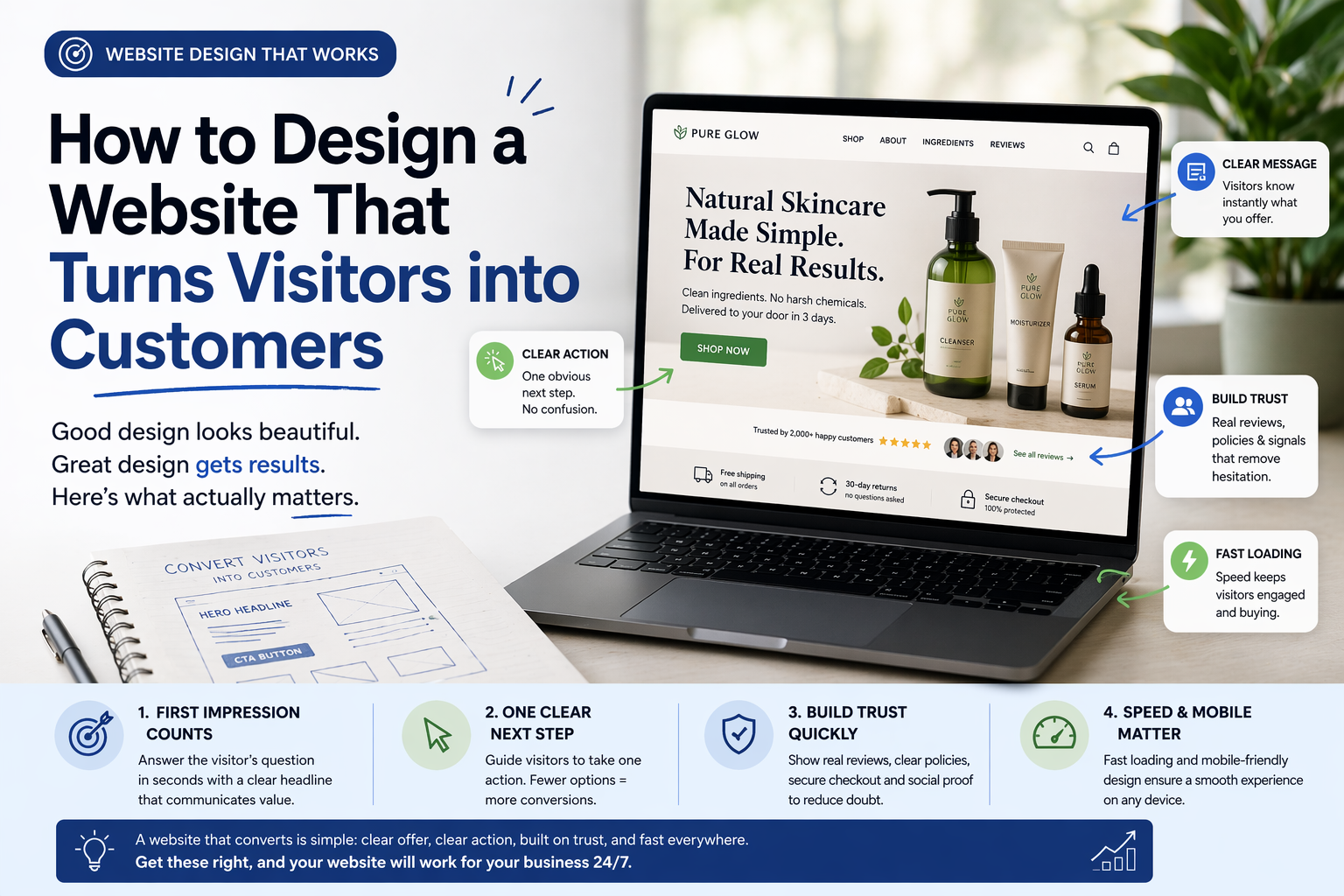
A friend of mine runs a small skincare brand in Los Angeles. She had been selling mostly through Instagram and word of mouth, and at some point decided to invest in a proper website. She hired a designer, spent around four thousand dollars, and launched something that honestly looked beautiful. Clean layout, nice fonts, good product photos.
Three months later, she called me. The website was getting decent traffic from her Instagram bio,o but almost nobody was buying. People were landing on the site and leaving without doing anything.
The design looked great. But it was not doing its actual job.Looking Good and Working Well Are Two Different Things
This is the thing most people do not realize when they think about website design. A website that looks impressive and a website that actually converts visitors into customers are not the same thing. Sometimes they overlap. Often they do not.
A good-looking website makes you feel proud when you share the link. A website that works makes you money while you sleep. The goal is to build the second one, and ideally make it look good too.
The difference comes down to how clearly the site guides someone from landing on the page to taking an action. Every design decision either helps that journey or gets in the way of it.The First Few Seconds Decide Everything
When someone lands on your website, they are not reading carefully. They are scanning. In the first few seconds, they are trying to answer one question — is this what I was looking for?
If your homepage does not answer that immediately, most people leave. Not because they did not like the design. Because they were not sure what the site was even about.
Your headline is doing most of this work. It needs to be plain and direct. Not "empowering your journey to wellness" but something like "natural skincare products made without harsh chemicals, delivered across the US in three days." You read that, and you immediately know if you are in the right place.
My friend's homepage headline was the name of her brand in large letters. Beautiful typography. Zero information. That was the first thing we changed.Make It Obvious What You Want People to Do
Every page on your website should have one clear next step. Not five options. One.
If you want someone to buy, make the buy button obvious. If you want them to book a call, make that the only thing that stands out. When you give people too many options, they freeze and do nothing. This is not a theory. It happens on almost every website that is struggling to convert.
A software company in San Francisco had a homepage with four different buttons in the header — Start Free Trial, Watch Demo, Read Docs, and Contact Sales. They removed three of them and kept only Start Free Trial. Signups went up 38% the following month without changing anything else on the page.
One clear action. That is it.Trust Is Built in Small Moments
People do not buy from websites they do not trust. And trust is not built through a mission statement or a values page. It is built through small, specific things placed in the right spots.
Real customer reviews with actual names and photos matter more than a generic testimonials section. A clear return policy mentioned near the buy button removes hesitation right when someone is about to click. Showing exactly how many people have bought or how long the company has been around adds quite confidence.
My friend added twelve reviews from real customers with photos to her product pages. She added a simple line near the checkout button saying free returns within thirty days. Her conversion rate went from 0.8% to 2.4% in six weeks. Same traffic, same products, same prices.Slow Loading Kills Conversions Before They Start
You can have a perfect headline, clear buttons, and strong trust signals. If the page takes six seconds to load, most people are already gone.
Speed is part of the design. It is not a separate technical concern you deal with after launch. Uncompressed images, too many plugins, cheap hosting — these things add seconds, and those seconds cost you, customers, directly.
Run your site through Google PageSpeed Insights. If your score is below 70 on mobile, that is hurting you more than any design problem.Mobile cannot be an afterthought
More than half of all web traffic is on phones. If your website was designed on a laptop and only tested on a laptop, there is a good chance the mobile experience is broken in ways you have not noticed.
Buttons that are too small to tap. Text that runs off the screen. Images that take forever to load on a mobile connection. These things are invisible to you in the office and very obvious to the customer trying to buy on their phone.
Test your site on an actual phone, on an actual mobile network, before you call the design done.Getting the Design Right From the Start
A lot of conversion problems come from working with designers who are focused on how the site looks rather than how it performs. If you are looking for Website Design Services in California, find a team that asks about your goals, your customers, and what action you want visitors to take — not just what colors and fonts you like.A website that converts is not complicated. It is clear about what it offers, makes the next step obvious, builds trust quickly, and loads fast on every device. Get those four things right, and the design does its actual job.